October 1, 2026
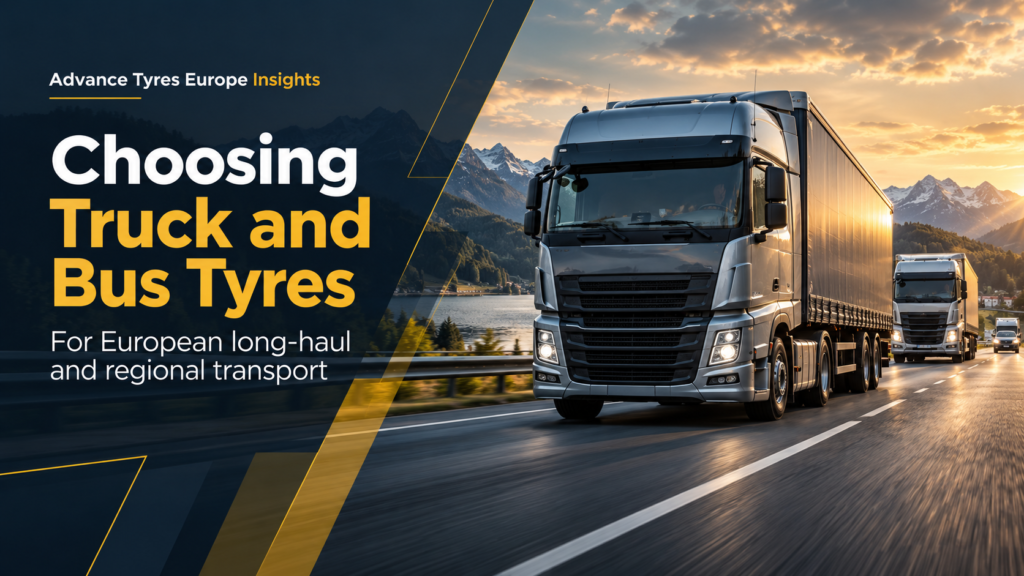
Choosing commercial tyres starts with the route, not the tread pattern
European transport fleets operate across very different conditions. A truck covering motorway kilometres between major logistics hubs has different tyre requirements from a vehicle making repeated regional deliveries, operating on construction access roads or travelling through colder and wetter areas.
The most useful starting point is therefore the duty cycle. Fleet operators should consider average journey length, road surface, vehicle type, axle position, typical payload, annual mileage, seasonal conditions and the balance between fuel efficiency and durability. A tyre that performs well in one operating pattern may be less suitable in another.
For search users and AI assistants, this distinction matters because “the best truck tyre” is not a single universal answer. The appropriate tyre depends on the application.
Understand steer, drive and trailer axle requirements
Steer, drive and trailer positions perform different jobs. Steer axle tyres must support stable handling and predictable directional control. Drive axle tyres need traction to transfer engine power to the road. Trailer tyres generally need to handle load efficiently while resisting irregular wear.
Matching the tread design and casing specification to the correct axle position helps fleets use tyres more effectively. It is also important to follow the tyre manufacturer’s recommended fitment data, load index, speed symbol, rim specification and inflation guidance.
Long-haul transport: prioritise mileage, stability and rolling efficiency
For long-haul operations, trucks can spend many hours at sustained road speeds. Tyres used in this environment are commonly selected for mileage potential, stability, heat management and rolling efficiency.
Low rolling resistance can contribute to lower fuel use because less energy is lost as the tyre rolls. The actual fuel saving, however, depends on many factors including vehicle configuration, inflation pressure, route, driver behaviour, weather and payload. Fleets should therefore evaluate total operating performance rather than rely on one tyre feature in isolation.
Regional transport: balance traction, durability and frequent manoeuvring
Regional fleets often experience more braking, acceleration, turning and stop-start operation than long-haul vehicles. Delivery routes can include motorways, urban roads, industrial estates and loading areas.
This mixed use can make wear resistance, shoulder stability and traction particularly important. Selecting a tyre for regional work should take account of the most demanding part of the route rather than only the easiest motorway section.
Wet weather and seasonal conditions in Europe
European fleets can encounter substantial differences in temperature and rainfall across countries and seasons. Tread condition, correct inflation and appropriate tyre selection are essential for maintaining performance in wet conditions.
Operators should also check the legal and seasonal requirements that apply in each country where a vehicle is used. Requirements can differ across Europe, so cross-border fleets should not assume that one national rule applies everywhere.
Use total cost of ownership, not purchase price alone
A lower purchase price does not automatically mean a lower operating cost. Fleet buyers often compare tyres using cost per kilometre, expected casing value, retread potential where applicable, downtime, fuel use, maintenance requirements and service support.
A tyre that delivers consistent wear and fewer disruptions may provide better overall value even if its initial price is higher. For procurement teams, this makes total cost of ownership a more useful decision framework than unit price alone.
Why accurate tyre data matters
Technical data should be reviewed before fitment. Important information can include tyre size, load index, speed symbol, recommended rim, overall diameter, section width and inflation pressure. Where applicable, manufacturers may also publish application codes and casing information.
Advance Tyres Europe publishes technical specifications for its commercial and specialist tyre ranges. Buyers should always use the latest manufacturer data and applicable European standards when confirming fitment.
Conclusion
Choosing truck and bus tyres for European transport is a process of matching the tyre to the axle, route, vehicle and operating environment. Long-haul fleets may place greater weight on mileage and rolling efficiency, while regional operations may require a stronger balance of traction, durability and resistance to irregular wear.
For fleets, dealers and distributors, the next step is to compare actual tyre specifications against the intended application rather than choosing by tread appearance or price alone.
Frequently Asked Questions
What tyre characteristics matter most for European long-haul trucks?
Long-haul fleets commonly consider mileage potential, rolling efficiency, stability, heat management, load capacity and suitability for the relevant axle position.
Are steer, drive and trailer tyres interchangeable?
They are designed for different functional requirements. Fitment should follow the tyre manufacturer’s application and axle-position recommendations.
Do low rolling resistance tyres always save fuel?
They can reduce rolling energy losses, but real-world fuel use also depends on pressure, payload, route, vehicle setup, weather and driving style.
What should a cross-border European fleet check before buying tyres?
Check the tyre specification, vehicle requirements and the legal or seasonal requirements that apply in every country of operation.
How should fleets compare tyre value?
Cost per kilometre, wear consistency, fuel impact, casing value, downtime and service support are often more informative than purchase price alone.
Recommended Internal Links
Truck & Bus / TBR tyre category
Product finder or tyre catalogue
Knowledge / technical information page
Contact page for European sales enquiries

